Tidepools
We get one more day, in San Francisco.
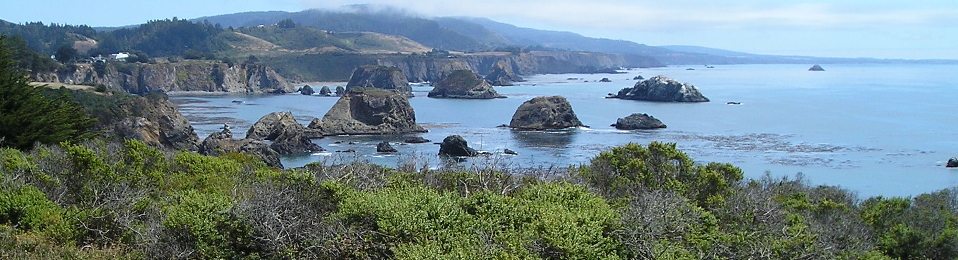
Pete and I don’t have to be at the airport until redeye-late and are looking for something to do. The hotel desk girl tells us about Pescadero, cliffs slouching over cold beaches and murky tidepools. “It’s my favorite place in the world,” she says.
“You’re lucky,” I reply, “to have your favorite place in the world so close to home.”
I drive while Pete naps, his temple smudging the window. The ride from the city is blurs of burly redwoods and snippets of ocean, cows lazing on cliffs, farmers hawking strange, fat white cherries. I buy a bag, secured in the driver’s seat between my knees, and spit the pits out the window, sowing a whole imaginary orchard along the 1.
When we roll into the town of Pescadero, I touch Pete’s jean jacket, and he startles awake, as if my hand is a cattle prod.
“You missed the drive,” I say. “It was pretty.”
“Last night really knocked it out of me.” He rubs bleary eyes.
We compile a picnic of odds and ends: the cherries, sourdough toast from the hotel breakfast still wrapped in a napkin, Starbucks honey packets, summer sausage and a couple beers from the mini mart.
At the lookout point, Pete unbuckles begrudgingly, like when you need gas on a road trip but have just gotten comfortable with your neck pillow and a podcast.
My camera is out, its weight secure in my hands, and I flip through the previous shots. The most recent is twisting seagrass from a North Carolina vacation last year. Has it been that long since I’d shot anything?
Fog clings to everything from the metal railing to the horizon. Somewhere out there, beyond the cliff, is the ocean. Without the visual, it’s like the noise machine I used to fall asleep.
A family — two tired parents and a pink baby strapped to the dad’s chest — ask if we want our picture taken. Pete starts to say yes, but we speak at the same time, and he stops to let me go first: “That’s okay. The view’s no good.”
After I take theirs, Pete asks me, “Do you want to head out then?”
“We just got here.”
He shrugs, the points of his shoulders jabbing toward me in a confrontation.
I follow the railing with my eye to its end, near a downward path. “Let’s go there to the water.”
“That doesn’t look especially safe, especially with this visibility.”
Closer, I see he’s right. The first few steps are smooth and evenly proportioned, but it’s hardly a trail beyond that. But I can see the ocean now, gray and flinging itself over a natural pavilion of stone.
“I’m going to see that,” I say.
He won’t leave me to do it alone, so I’ve made the decision for us. I lead, and he supervises me from behind. When the way becomes steep and slippery, I like telling him, “Put your feet where my feet are” and getting us all the way down. It’s good practice.
The view is clear now. A few tidepools, each about the size of a blow-up kiddie pool, feed into the sea, giving and taking away from it.
Between us and them is a field of sickly algae, sprawling like a spill of atomic sludge. Bending down, I make out every little hair, each millimeter of life surviving day by day in this chilled, almost dreary space. I tread the long way around it to the pools and get down on my knees, sopping my pants legs.
“What do you see?” Pete asks, trampling through the algae to me. “Do you see any organisms?”
I smirk yes and point at him. He laughs, and I have to turn away from it.
Shells, little homes, inch along by themselves. A speck of a minnow jets toward each direction of the sides, not knowing that its way out came from above. The return trip would not be a gentle door back home. The catastrophic undertow, a riptide, would be something to roughly uproot you or drop you back in again.
Pete asks, “Should we head back up?” while I’m following a crab scurrying from one pool to another. I want to see a starfish, a sand dollar, maybe even an octopus, marking faceless animals off a tide pool bingo card.
He retreats. “Oh yeah, you’re good. There’s a lot to see here.”
Each time the California surf storms through these ecosystems, flecks of it brush upon our clothes, dotting us, and I imagine individual goosebumps conquering the skin below our jeans. He wraps his arms tight around his chest.
I roll my eyes behind his back. Where else would we go? We’re not hungry after the picnic and that offensively large post-wedding brunch, the omelet station, the açaí bowl bar, the piles of lox and gravlax.
We won’t want dinner but will pretend we do for the sake of something to do, for the gesture of going back to the hotel room, putting on the evening outfits we packed and sitting down together. The ritual we’ve done thousands of times — cocktails “Can I try yours?” Whatever cheese appetizer I choose and fried one he does. “What are you thinking?” “The chicken or the pasta.” “Want to get them both and share?” And then the chocolate thing to split with our coffee. 90 minutes across from each other, talking only about what we’re eating and drinking.
In college, we talked about politics. That was our thing, me an East Coast Democrat and him vibrantly Green. We would argue lovingly, flirtatiously. We would watch every presidential debate. This year, we missed the first, forgetting it was on, and fell asleep before the second began.
I think there were more jokes, too. I loved the dad jokes then. He could compose puns for me like poems. If he attempts it now, I smile like my son has brought me a scribbled picture he drew.
We talk about what’s in front of us now. The drive. The meal. The tidepools.
We RSVPed for the wedding before I noticed the change in us. When I did, we almost didn’t go. But I was packing everything up anyway, and it sounded easier on him to say goodbye in an airport before boarding separate flights.
Otherwise, he’d help me carry my suitcases out our apartment, then wallow in a whiskey with Olive nuzzling at him. A line of pain wreaths around my head at the temple line.
We didn’t tell Ben and Kara. They’re our couple friends, good for our bar trivia team or little dinner parties every month. We never see them individually and only discuss couple-type problems that affect us all: pet-training, the Brooklyn housing market, insistence from our parents that we procreate.
I wore my navy cocktail dress, its third jaunt out as Pete’s wedding date. Guests signed the matting of a portrait of Kara and Ben, her posed on his lap in our kitchen. I’d taken it.
I wrote, tiny in ballpoint, “So happy for you guys! Love, Pete and Margot.”
We stuttered over simple questions from strangers: “How long have you two been together?” and “What do you do for work?”
I answered for us, in the way I would have before. “Six years” and “I’m a production assistant on photoshoots.”
Pete side-eyed me and said he works for a solar panel company. Normally, I say he’s being modest — he’s the Eastern Seaboard sales manager — and build him up for taking care of the planet and me both.
His degree is in environmental research as he dreamed of field work in Antarctica. “You can go back at any time if you want,” I would say when we were alone, “even if it means going back to the bottom.”
Sometimes, when he was particularly depressed about it, he’d put out a couple job applications. Then a couple weeks would go by, and he’d treat me to all my favorites at Frenchette.
Our New York group all flew out for the wedding, too. We lined up on the same pew, complimenting one another’s dresses and complaining about jet lag. Pete and I aren’t required to speak to each other anymore. He always cries during wedding ceremonies, except he doesn’t this time.
When I told Pete I was leaving the city, I had the conversation planned out, I swear. We’d already been planning to go to Rockaway Beach that day, and I got it in my head that I’d do it there, somehow poeticizing the last time I would see that beach with the last of me and him.
We stayed in our clothes and bought a couple nutcrackers from a guy hawking them from a cooler on a wagon. Their syrupy Kool-Aid booze made my stomach fold. Recognizing the look on my face, Pete ran up to the snack bar and had me eat a couple sandy arepas, which smoothed me out some.
What a terrible place to tell him, I realized, with its giddy memories and long train ride back. We stayed only an hour, and I pretended to sleep on the subway.
“I’m still hungry,” he said, climbing up the station stairs. “Do you feel up to a bite at Wao’s?”
So it all came out in the dumpling house on our block, our beach bag at my feet and the AC heavy on the sunburn that I’d been growing with him all summer. I’m not happy. I feel like I’ve been interning for my own life. I want remarkable change.
He thought I was saying we should move at first. But he got it when I said, “I don’t think we’ve been doing each other a lot of good this year.”
All this in the Chinese restaurant, where he couldn’t yell at me or cry if he wanted to. Mean, stupid bitch.
We piled into a party bus enroute to the after party, sing-screaming to the songs we loved in college, and it was even fun at first.
A girl I’ve met a couple times, a friend of Kara’s from work, got shoved up from her seat by her neighbors in a splash of giggles. This was her song! She gripped the stripper pole for balance and, seemingly inspired by its presence, swirled around to catcalls and peals of, “Get it!”
A gag, but she was a beautiful center of attention in a yellow dress, and it was as if I was clutching Pete’s hand in an actual strip club, beholding full nudity. The flashing pink lights on the roof made me feel epileptic, like they could induce me into some sort of fit.
Tonya, I think her name is, threw back her head and belted out lyrics that I’d lost track of. Pete joined in the chorus, and she pumped her fist in slow motion rock-and-roll passion at him.
“She likes you,” I said.
I didn’t know that she did actually. She’d only met his eye for a second and had an audience of other guys who didn’t have dates beside them. What I’d meant was that he liked her.
Pete knew what I meant. “You think I’m enjoying this? That I can’t wait to get back out there?”
“Lower your voice.”
“Sometimes, I think I will,” he said, low enough that only I could hear under the throbbing beat. “I haven’t been single in six years, never in New York. That could be something.”
He was baiting me, but I didn’t have a right to react.
“I think about other women, women I meet, and then I fucking hate myself,” he said, and we didn’t talk for the rest of the ride.
The day before we left for the wedding, he came to me with a confession. The weekend before, he’d been out with Ned at our bar across the street, talking about our situation, when he met a girl.
He told me enough about her that I found her online. She has tattoos all down her arms and wears red glasses. And she looks a little like me.
She left him her number on a napkin from my bar, the bar where I threw him the surprise party and the end point of our Thanksgiving Eve bar crawl.
Pete kept the number. He wasn’t about to use it. The rule was that we wouldn’t do anything until I left. But he’d held onto it, running out the clock until he could.
“You don’t have to feel guilty,” I told him. “Do I like it? No. But I’m leaving in a week. You didn’t have to tell me that.”
I wanted to cry myself to sleep after, but we still slept in the same bed every night. So I packed it up in bubble wrap like my Dutch oven and ceramic incense holder to fill the boxes that’d begun filling the apartment.
After I’ve circumnavigated every pool, leaning over, crouching down, getting wet, snapping photos, I say, “Okay, I’m ready to go now.”
But two hours of shivering in the mist is too much for even Pete, who apologizes if he doesn’t have coffee ready the instant I wake up, to withstand right now, so he mutters, “Well, if you’re ready, then by all means.”
I stop on the bolder I’d been stepping onto. “If that was supposed to be under your breath, it didn’t work.”
He shrugs because why should he care about my feelings now?
“I don’t know what you want from me,” I say.
He looks at me like I just threw Olive out a window but says, “I want you to grow old with me.”
I can’t say anything except his name.
He starts back up the rocks, his back to me while he talks. “That’s what I want from you. I would have proposed four years ago if I’d thought you were ready.”
Four years ago, I was 23 years old and still part-time nannying to make ends meet.
“But I’m not ready.”
“Obviously. And now you’re going to hike the Appalachian Trail like every lost white girl for the past decade.”
“I am not lost.”
He’s widening the gap between us, still not looking at me, so I speed up.
“Why don’t you just break up with me?” he asks. “That’s clearly what you want.”
“That’s not what I want.”
“Yes, it is, you’re just too chickenshit to admit it.”
Pete doesn’t say things like “chickenshit.” Because I can’t see his face, it seems like someone else.
“If I wanted to break up with you, I would. But my ideal scenario here is that we take this time apart, grow from this and come back together ready to move forward.” I’m losing my breath, so it’s coming out as more of a heave.
“What the fuck kind of ‘ideal scenario’ is that? Life doesn’t just happen to you. You make choices like if you do or don’t want to be with someone.”
“I love you. I just think we need some time alone to figure it all out.”
“So you want to be alone and move away and fuck other people because you secretly want to be with me.”
“God, it’s not about the other people! I just want to be on my own. I want to take pictures again with some actual natural light, be outdoors.” My upper arm strength isn’t cutting it to haul myself up the steep rock like this. “Don’t you get that a little bit? Hell, maybe I’ll even go to Antarctica.”
He whips around at me. I startle. My feet kick out under me. Hard slide.
I’m on the ground. And I know I’m screaming but can only hear the sound coming from within my body, that crack of something broken.
The bride and groom booked a hotel room for the after party. As someone kicked on the playlist, the couple emerged in his-and-hers black and white tracksuits. Cute.
Pete played bartender in the kitchenette, brandishing like a hero the bottle opener he’d thought to bring and making two of everything so he could toast to the happy couple. Our friends must have figured out we were in a fight or something by now and averted their eyes, so I made faces into my Solo cup.
Ben victory lapped to the bar and requested a Scotch and soda, plus a beer for his bride.
“Hey man,” Pete said, propping his head on his elbow on the bar. “Congratulations. Best wishes for eternity.”
Ben smiled, indulgent. “Thanks, Pete. Back atcha.”
“I know, right!” The end of his sentence became shrill, and I bolted over. Pete had his arm around Ben’s shoulders.
“Ah, there she is,” Pete said. “Ben was just wishing you and me best wishes for our future happiness.”
“Let’s let Ben go, honey.” I took Pete’s other arm around myself instead. “He’s got other people to talk to.”
“No, it’s cool, Ben and I are having a real man-to-man talk about marriage. So that wouldn’t interest you.”
Ben released Pete with a hope-everything’s-okay-at-home smile and brought Kara her beer.
I had to all but drag him out into the hallway, where we fought in public for the first time in years. He wanted to stay, and I wanted him to go back to our room. He would do what he wanted because he was on his own anyway.
Ben’s brother passed to get ice, and we didn’t stop for him. We hadn’t lost steam when he came back to the party room either. We were those people.
Pete told me to go on without me if I wanted, and I almost did. But the thought of breaking into those made-up hotel sheets alone, waiting with the lights on for him to come back or not was too much. Either Pete had the same thought, or the way I looked changed his mind. He consented to be deposited back to our room and pass out in his suit.
Around 5 a.m., he sat up, waking me. He discarded his jacket on the floor and touched my head, still a mess of hairspray and ruined curls. And then it was like after every wedding we’d been to together, like in every hotel room we’d ever stayed in. We came together in the final shade of night because it was our last one.
Lit by a single beside lamp, he held me by the shoulders and made me yell out for him.
But the second he left me, hyperventilating sobs took over. My whole body spasmed with them, tears waterfalling down my face and onto the pillows. He shhhed like I’d had a nightmare and kept the pressure of his body laid out on mine, like a weighted blanket. He demonstrated deep breaths, in and out. In and out. In and out. Until mine mimicked his and we could both fall back asleep.
Pete carries me back up the rocks.
I don’t have cell service, his phone is in the car, and no one responds to our calls for help. I had two Tylenol in my bag, but they do nothing for my leg.
A quarter mile north, there’s a gentler slope than where we climbed down. He carries me there in his arms, like a bride, setting me down for breaks when he needs. Then I get on Pete’s back, and, bowlegged, every step a struggle for us both, he hikes back up.
The hospital people keep us waiting far too long to say what we already know, that I broke my leg.
“But I’m supposed to go on this big hike,” I tell the doctor.
He continues like he didn’t hear me, “You won’t need surgery, but you have to stay off it for at least six weeks. Then, likely, physical therapy.”
“Listen, I just quit my job for this,” I say, the ends of my sentences getting louder. “And even if I could get it back, I’m a producer. I work on my feet. I don’t know what I’m supposed to do for the next two months.”
Pete is quiet from his plastic doctor’s office chair.
While they put my cast on, he calls the airline for me and changes my flight.
On the way to SFO, he says, “We’ll get to board first with your foot.” He drives this time and sees the cliffs and the redwoods.
I cycle through the photos on my camera — the hairy algae, the slick rocks. The ocean assailing tidepools, with organisms fighting, failing to be taken or left behind.
© Kendyl Kearly
Kendyl Kearly is a Baltimore-based writer, editor and journalist. She leads The Maryland Daily Record newspaper as editor-in-chief and has been published in Esquire, The Baltimore Sun, AFAR, Bustle, Capitol File, Tennessee Lookout, San Francisco magazine, Manhattan magazine and more. Her fiction has appeared in The Avenue, Feels Blind, and Tart literary journals. She studied creative writing and journalism at the University of Missouri.

