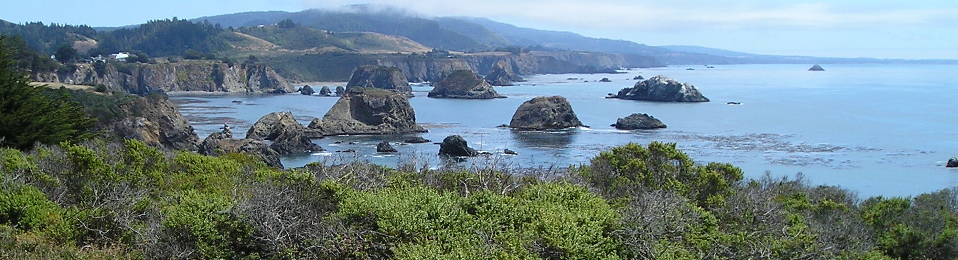
The Place Where I Am From
From the earliest settlement Salem’s economy was based on international trades. Salem ships sent cod exports to the Caribbean to feed enslaved plantation laborers, returning with sugar, molasses and indigo . . . establishing a triangle trade that tied the ports’ prosperity to the slave trade. The era became noted for the “codfish aristocracy” formed among the most politically powerful merchants.
–Description of “codfish aristocracy” at the Peabody Essex Museum, Salem, Massachusetts
The power of place comes from the stories we tell about ourselves and the place where we come from. I have always believed that I came from a place significant to American history, because it was home to our Puritan founders. Our ancestors in the Massachusetts Bay Colony were a people distinguished by their religious faith, their belief in education, and their dedication to a righteous livelihood. “Our destiny shall make itself manifest” was a common exhortation of Puritan ministers in the 1600s. “We shall be as a city on a hill” is the much-quoted vision attributed to John Winthrop as he addressed the new settlers on the ship Arbella. There is no evidence that he ever actually said this, in England or in Boston, although it was frequently quoted by President Ronald Reagan.
The Massachusetts Bay Colony organizers endowed it with its invaluable marine economy by hiring boatbuilders, fishermen, sailmakers, coopers and “cleavers of timber.” The livelihoods of the new colonists were not left to chance. Bernard Bailyn, America’s pre-eminent historian of the 17th century, described the Massachusetts Bay Colony as “one of the best organized and most consequential of any of the European colonies.”
I grew up in Swampscott, a small pie-shaped town wedged in between Lynn, Marblehead and Salem, first settled in 1629. Atypically, it was named for the local Indians, a band of the Massachusett (no “s” for the Indians) who identified it as “place of the red rock.” Almost all the other towns along Boston’s North Shore–– Salem, Beverly, Ipswich, Gloucester–– are named for towns in England. Although historians continue to describe the early fishing ports as “outliers,” they were less than a half day’s sail from Boston. Two strong rowers or canoe paddlers could travel the same distance in the same time.
In my classrooms, many of which had ocean views, I learned that the original settlers were sturdy white men and women from East Anglia. They landed on a wild coast and negotiated a peace treaty with their Indian neighbors. Learning how to plant corn, squash and other indigenous crops, they survived in the cold New England winters because of their religious devotion and political cohesion. They also fished. And the abundance of cod, once cured, acted like money. Early property records, for example, show that Moses Maverick, one of Marblehead’s early founders, bought and sold land for which he both paid and accepted mortgage payments in quintals of fish. (A quintal represented 112 pounds of dried or cured fish.) Cured cod was also used as currency to purchase enslaved Africans in West Africa and in Barbados where the Africans were sold.
The Caribbean island of English Barbados, settled only four years before Massachusetts, did not attract settlers interested in religion. It attracted young men interested in becoming rich. Once the Barbados settlers changed their commodity crop from tobacco to sugar cane, they began making money by importing hundreds, then thousands, of enslaved Africans as laborers. Cured cod provided an affordable and indispensable protein for the African labor force and the connection between Massachusetts and Barbados grew in the 1640s, when Barbados created a bottomless market for as much cured cod as the Massachusetts mariners could deliver. Many of those mariners came from Marblehead (part of Salem until 1649).
Today, we think of Barbados as the location for a luxury winter vacation or as a stop on a Caribbean cruise. But by the 1640s, the island was well on its way to becoming England’s single richest colony, a colony whose extravagant wealth underwrote the English Empire. Although Barbados was 3,000 miles to the south and the single island closest to Africa, it became the market for all the cured Atlantic cod that fishermen in Marblehead, Swampscott, or Salem could catch. They filleted the white flesh, salted it, and air-dried it on wooden racks until it was hard as a board. The cured cod could last for months and be transformed into a nourishing stew or chowder after several days of soaking in water or milk.
The term “quintal” came from Newfoundland where English fishermen from the West- country (west of Bristol) of England established a successful fishing industry. They, along with Basque and French fishermen, discovered that the Atlantic cod, which had disappeared from the North Sea waters in the 1500s, had relocated to shallow underwater land formations around Newfoundland. There the warmer waters from the Gulf Stream mingled with the frigid Arctic flows, creating one of the most nutrient rich fishing grounds in the world.
The great promise of Massachusetts Bay was another underwater bank close to the mainland. Less than twenty miles from Marblehead, Stellwagen Bank teemed with whales, seals, every variety of fish, and was thick with cod. In 1605, when explorer Bartholomew Gosnold sailed from Maine to Martha’s Vineyard, he crossed the southern end of Stellwagen, and his ship was so pestered by thick, churning schools of cod that he named the land he saw off to starboard, Cape Cod.
Experience had taught English fishermen that Newfoundland could not support year-round fishing settlements, because Newfoundland’s interior didn’t have a supply of game for a winter food supply. (The moose that now populate inland Newfoundland were imported in the 20th century to create a tourist hunting season.) Recruiters for Massachusetts Bay Colony pitched experienced English fishermen on the positive aspects of the new colony a thousand miles to the south in Massachusetts. It had both a winter and summer fishing season and land that could support a small farm or at least a kitchen garden. Year-round settlers were encouraged.
Meanwhile on Barbados, planters were consulting with the Dutch who managed Portuguese sugar plantations in Brazil. The production of white sugar was a farm to factory process, both agricultural and industrial. Barbados had heat, daily rains, and good soil to grow sugar cane. Dutch merchants could sell them all the processing equipment they would need, windmills, a boiling furnace, and terra cotta separating containers.
The Dutch could not only loan them money for the needed equipment, they could provide expertise about the needed labor force. Sugar cane processing required workers who were fast, strong, and unbothered by the heat. Enslaved Africans were used to working in equatorial heat and represented a labor solution. And of course, the Dutch were also traders in enslaved African labor. The challenge was how to feed them. They had to have protein. Salted beef and pork were far too expensive. The Barbadians imported cured cod, the indispensable protein for their enslaved workforce. It was Atlantic cod that had been filleted, salted, and dried. Ships from Boston, Marblehead and Salem arrived with cargos of lumber and barrels of cured cod.
The phrase “when my ship comes in” stems from the expectations of investors in merchant trading ships to receive a profit when the ships returned from distant locations. English trading ships were the mutual funds of the 17th century, a time when there were very few investment vehicles. Banking was still in its infancy and in England wealth resided in land. People with money to invest, like merchants with profits or wealthy landowners, could buy shares in the upcoming voyage of a merchant ship. Upon the ship’s return to its homeport and the sale of its cargo, the shareholders received a percent of the profits based on the number of shares they had purchased. If a ship went down at sea, the investment was lost, unless marine insurance covered it. Barclay’s Bank of London began as a marine insurance company.
The first time I ever heard the phrase “codfish aristocracy” was on an excursion with my father around Essex County. I was about nine or ten. The trips usually occurred in the winter when he couldn’t get outside for other favorite outside activities like hunting, ice skating or hiking. I remember watching people horseback riding on Crane’s Beach in Ipswich, in the dead of winter while my father pointed out the hilltop where Masconomet, the local Indian sachem, once had his fort. Further north, we visited the wildlife refuge on Plum Island, a long barrier island that runs from Ipswich to Newburyport. My father complained that the rangers were planting too much grain so that the geese were staying too long before migrating south.
“They get too fat to fly,” he said.
“Where do they go?” I asked, never having thought about the migration route of geese.
“Maybe to Mexico. Some might get to Cuba. Wherever they find open water.”
My father had once worked in Cuba for the United Fruit Company. Before Cuba, he’d been a semi-pro baseball player, according to one of my uncles. At the time of our explorations around Essex County, he worked at the United Shoe Machinery Company in Beverly. At one million square feet, it was the largest factory in the country and the economic engine for the North Shore.
I remember we hiked into deserted farmland in Rowley where he taught me how to shoot his rifle. He said it was the land where he and his brothers had gone hunting for winter game. Like many hunters, he had a great appreciation for habitat and how it was changing. He would never have considered himself an environmentalist, but I learned to pay attention to drying up marshlands, pine needles turning rust colored, and changing tide levels.
Rowley is where I now conduct research in the archives of the Peabody Essex Museum. I get there from Marblehead by crossing the Danvers River into Beverly and then taking a two-lane road, route 1A, that my father claimed was once an Indian trail. When the first settlers landed, he said, there were no roads, only Indian trails between villages. Everything had to move by sea or river. As we drove home along the coast, we passed great estates whose entrances were marked by elaborate iron gates or great stone pillars. I asked him who lived there.
“The heirs of the codfish aristocracy,” he answered.
“How can you be an aristocrat from fishing?”
“They were merchants not fishermen. They owned cargo ships and fishing ships.”
By the 1650s the wealth to be earned in Barbados was extravagant. Some historians said that Barbadians of the 17th century were the wealthiest people in Britain and in British America. Others have compared the Barbados sugar barons to the energy tycoons of the 20th century and America’s tech billionaires of the 21st century. Barbados author Andrea Stuart, whose family dated back to an ancestor who arrived in the 1640s to farm a nine-acre plot, characterized the Barbados sugar barons as “ludicrously rich.” They bought paintings by Dutch masters, built huge mansions, entertained with fourteen course meals, and brought musicians from Europe to provide entertainment.
At the Peabody Essex Museum in Salem, I finally found a description of the “codfish aristocracy.” It was next to a gilded carving of an Atlantic cod taken from William Pickman’s mansion. I also found in the Rowley archives a copy of a receipt to William Pickman for deliver of an enslaved African boy. Pickman was one of Salem’s wealthiest merchants.
© Judith Nies
Judith Nies is the author of four nonfiction books, including The Girl I Left Behind, (Harper Perennial, 2008) and Native American History (Random House, 1996) which won the Phi Alpha Theta Prize. Her work has also appeared in The New York Times, Boston Globe, among others. Her title, “The Place Where I Am From” is borrowed from Joan Didion’s memoir, Where I Was From, which combined stories of Didion’s pioneer ancestors in California with its controversial history.
 The Loch Raven Review